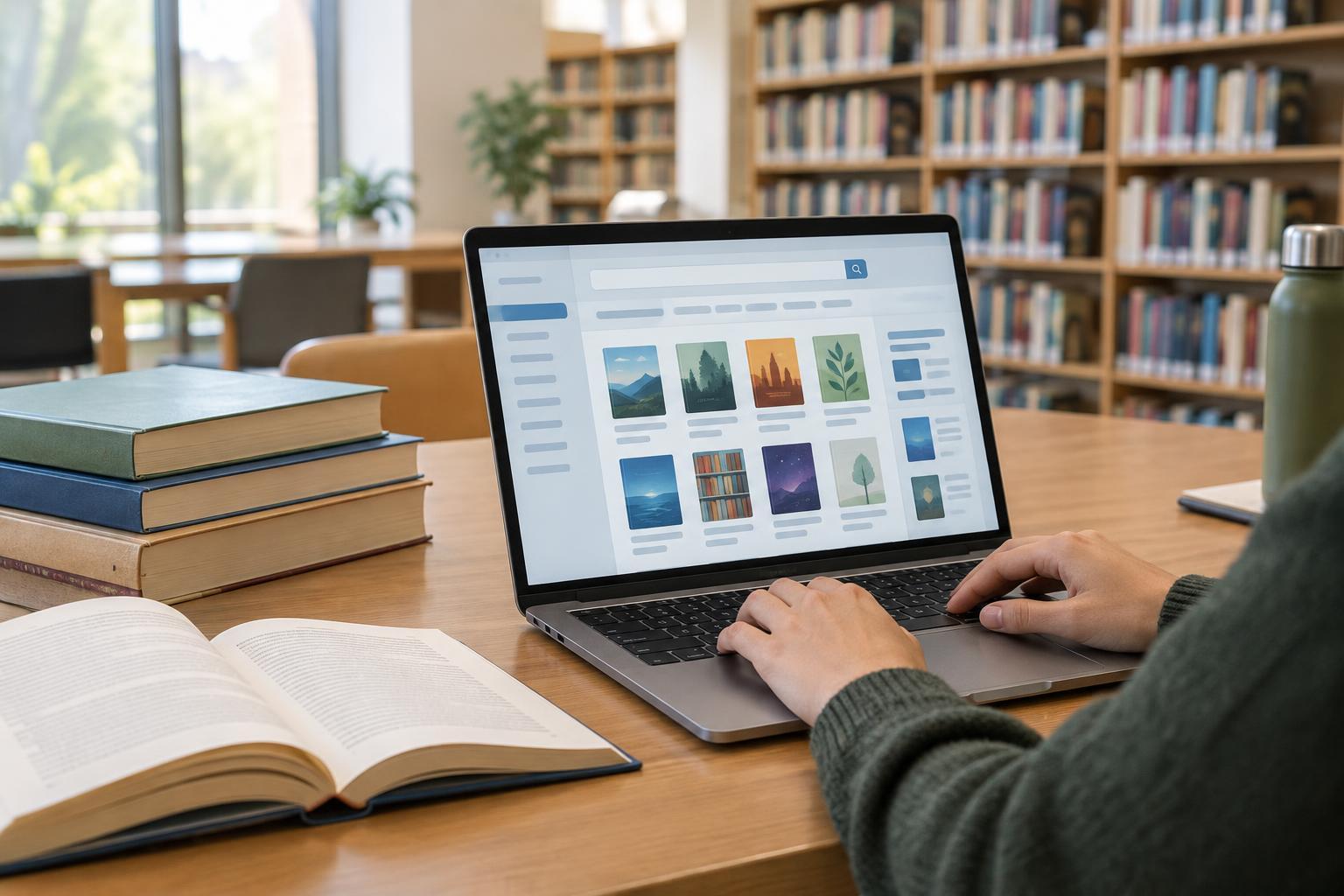
Start with the kind of book you need
Before opening a library catalog, turn your research need into a short description. Are you looking for an introduction to a subject, a book that examines one narrow question, or a particular title your instructor or colleague mentioned? That distinction guides your search. A broad book about urban gardening, for example, may help you learn the vocabulary of the field. A book on soil contamination in community gardens may be more useful once your question is specific.
Write down two or three central terms and a few alternatives. A catalog may describe a topic differently from the way you do: “community gardens,” “urban agriculture,” and “city gardening” can lead to overlapping but different results. If you know an author or exact title, search for that first. If you are exploring a topic, begin with its main concepts and leave out extra words until you see what the catalog contains.
Search broadly, then use the catalog’s controls
Many catalogs offer a general search box alongside options to search by title, author, or subject. A general search is a sensible starting point when you do not know how a book has been described. Scan the first results rather than assuming the top item is the best one. Look for titles that match your question, and notice which search terms appear in their descriptions.
If the result list is too large, narrow it with the controls your catalog provides. Common options include format, publication year, language, subject, and library location. A format filter can separate ebooks from print books; a subject filter can help distinguish books about the same word used in different fields. If you get few results, remove a filter or try a broader term. Catalog features and search rules vary, so use the options visible in your library’s interface rather than relying on a search trick that may not work there.
Read the full record before choosing a title
A catalog result is more than a title. Open its full record to check the author, publication details, description, subjects, and, when available, the table of contents. These clues help you judge scope. A book might mention your topic in passing, devote a chapter to it, or focus on it throughout. If a record offers a preview or contents list, look for the terms most closely tied to your question.
Pay attention to editions and formats. An older edition may be adequate for historical background or a stable concept, while a topic involving changing tools or practices may call for a more recent treatment. Two results with similar titles may represent different editions of the same work, or one may be print and the other an ebook. Record those differences before you decide which one to request or open.
Check how to get the book
For a print book, look for its status, library location, and call number. The status tells you whether the catalog currently shows a copy as available, checked out, or otherwise unavailable. The location tells you which branch or collection to visit; the call number helps you find the shelf. Availability can change, so check the record again before making a trip. If the book is checked out or held elsewhere, the catalog may offer a request or hold option.
For an ebook, look for a link such as “Access online” or “View ebook.” You may need to sign in with a library account, particularly when you are off-site. Access conditions differ: some ebooks open in a browser, while others offer limited downloads or require a particular reading app. If a link does not work, check whether you have signed in through the library and whether another ebook record exists. Library staff can help clarify access options.
Use a good result to continue the search
Finding one promising book can improve your next search. Its subject headings may give you more precise catalog terms than the ones you started with. Search one of those headings to find related titles, then compare their descriptions and contents. For print books, nearby call numbers can also lead you to related works, although shelf browsing will not show books that are checked out or held at another location.
Keep a brief record of useful titles as you go: author, title, edition, call number or ebook access note, and a sentence explaining why each book matters to your question. This saves you from repeating searches and makes it easier to compare sources later. If the catalog still does not reveal a suitable book, broaden your terms, ask a librarian for help, or check whether your library provides a way to request material from another collection.