Start with a paper you can identify precisely
When a paper answers part of your research question, its reference list shows what came before it. To find work that came after it, search for publications that cite it. This is called forward citation searching. It is useful when a key paper introduces a method, frames an important question, or reports a finding you want to examine in light of later work.
First, record enough details to distinguish the paper from similarly titled works: its full title, authors, publication venue, year and, if available, a persistent identifier such as a DOI. Check whether you are looking at a preprint, a conference version or a later journal article. Different versions may have separate citation records, so searching only one can miss relevant results. The aim is not to collect every mention of a topic; it is to trace responses to a particular work.
Use the citing-papers list as a starting set
Enter the paper’s exact title or identifier in a scholarly search tool or citation index, open the matching record, and look for a feature labeled “Cited by,” “Citing articles” or similar. You can then sort or filter the results by publication year to bring newer items into view. Search tools differ in what they index, and their records may contain duplicates or missing citations. If coverage matters to your project, repeat the search in another available tool and compare the results.
Suppose your key paper examines whether shade from urban trees affects people’s willingness to walk. A newer citing paper might study walking in a different climate, test a different measure of shade, or use the original paper only to introduce the broader topic. All three may appear in the same citing-papers list. Treat that list as a set of leads, not as a list of studies that confirm the key paper.
Apply date filters with care. A record’s year may refer to its online release or its placement in a journal issue, and a recently added search result is not necessarily a recently published study. Check the publication details on the paper itself when recency is important.
Screen for relevance before reading everything
Begin with titles and abstracts. Ask whether each newer source addresses your question, examines a comparable setting or population, or uses a method you need to understand. Keep a short list of promising items and note why each belongs on it. For the urban-tree example, a study of pedestrian routes may be directly relevant; a paper that cites the original study while discussing city greenery in general may be less useful.
Next, search within each promising paper for the key paper’s author name, title or reference number. Read the surrounding passage rather than relying on the reference list alone. Is the newer author adopting a method, contrasting findings, identifying a limitation, or citing the paper as background? Also check the newer paper’s own methods and results before drawing conclusions from its abstract or a single sentence. A citation tells you that a connection exists; it does not tell you what the connection means.
Follow the strongest branches of the trail
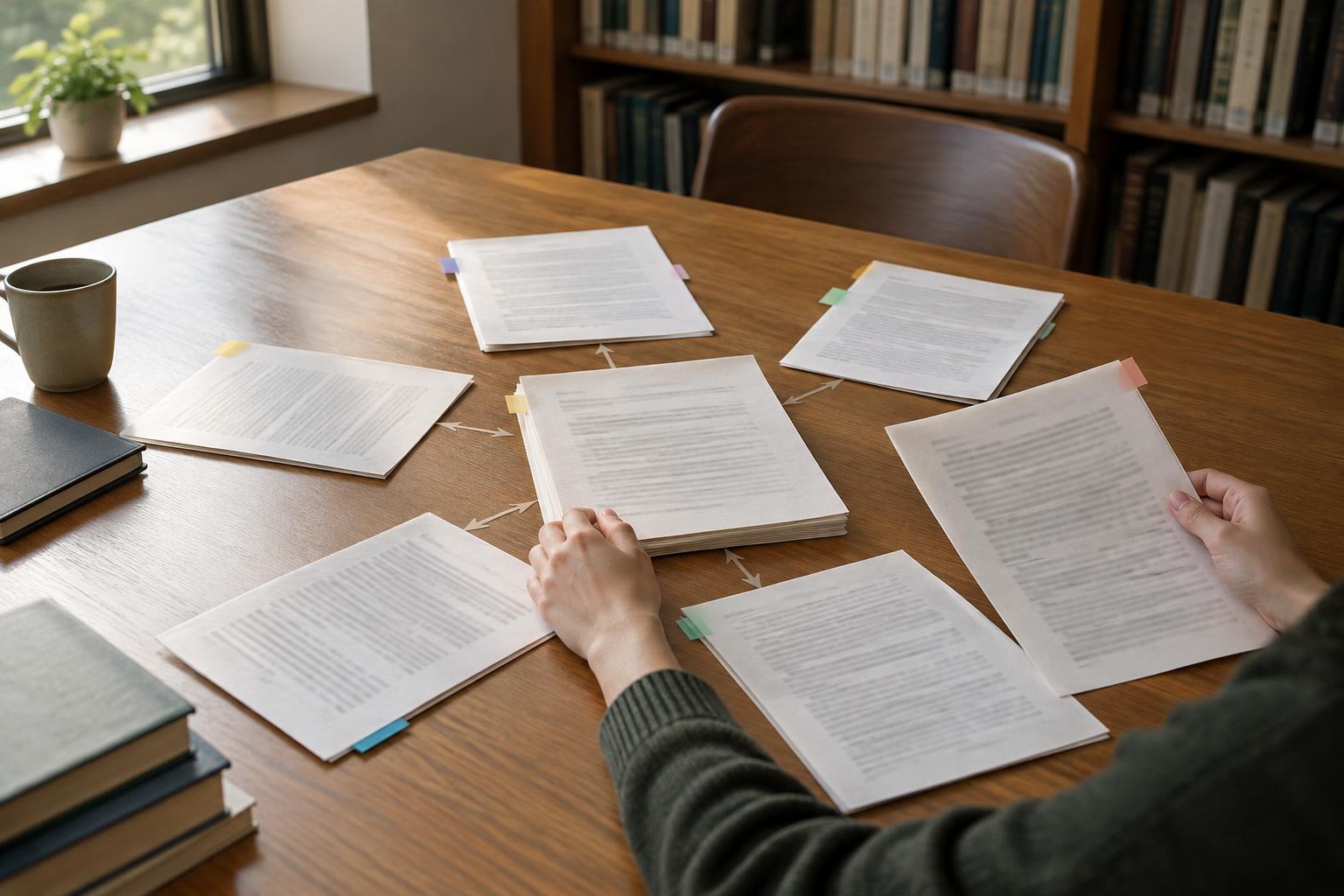
Once you find a newer paper that speaks closely to your question, use it as another starting point. Its references may reveal related work you missed, while its own citing-papers list may lead to more recent responses. This combination of checking references backward and citations forward is often more productive than repeatedly trying broad keyword searches.
Keep keyword searching in the mix, though. Relevant papers may discuss the same question without citing your starting paper, especially if they use different terminology or come from another field. Try terms drawn from the methods, setting and concepts in the most useful newer papers. If a promising result is unavailable in full text, its abstract can help you decide whether to seek access through a library or another legitimate route; it is not a substitute for checking the details you plan to cite.
Keep a record and know when to stop
A simple search log prevents you from repeating work. Record the key paper and any versions you searched, the tools used, the date filters applied, and the newer papers you kept or set aside. Beside each useful paper, write one sentence about its role: for example, “tests a similar question in a different setting” or “questions the original measure of walking.” These notes make it easier to explain later why each source belongs in your work.
Stop expanding the citation trail when additional results mainly repeat sources you have already seen or move away from your question. There is no universal number of papers that makes a search complete. A defensible collection contains sources that help answer the question, with their relationships to the key paper checked in context. Forward citation searching helps you find those relationships; careful reading helps you understand them.